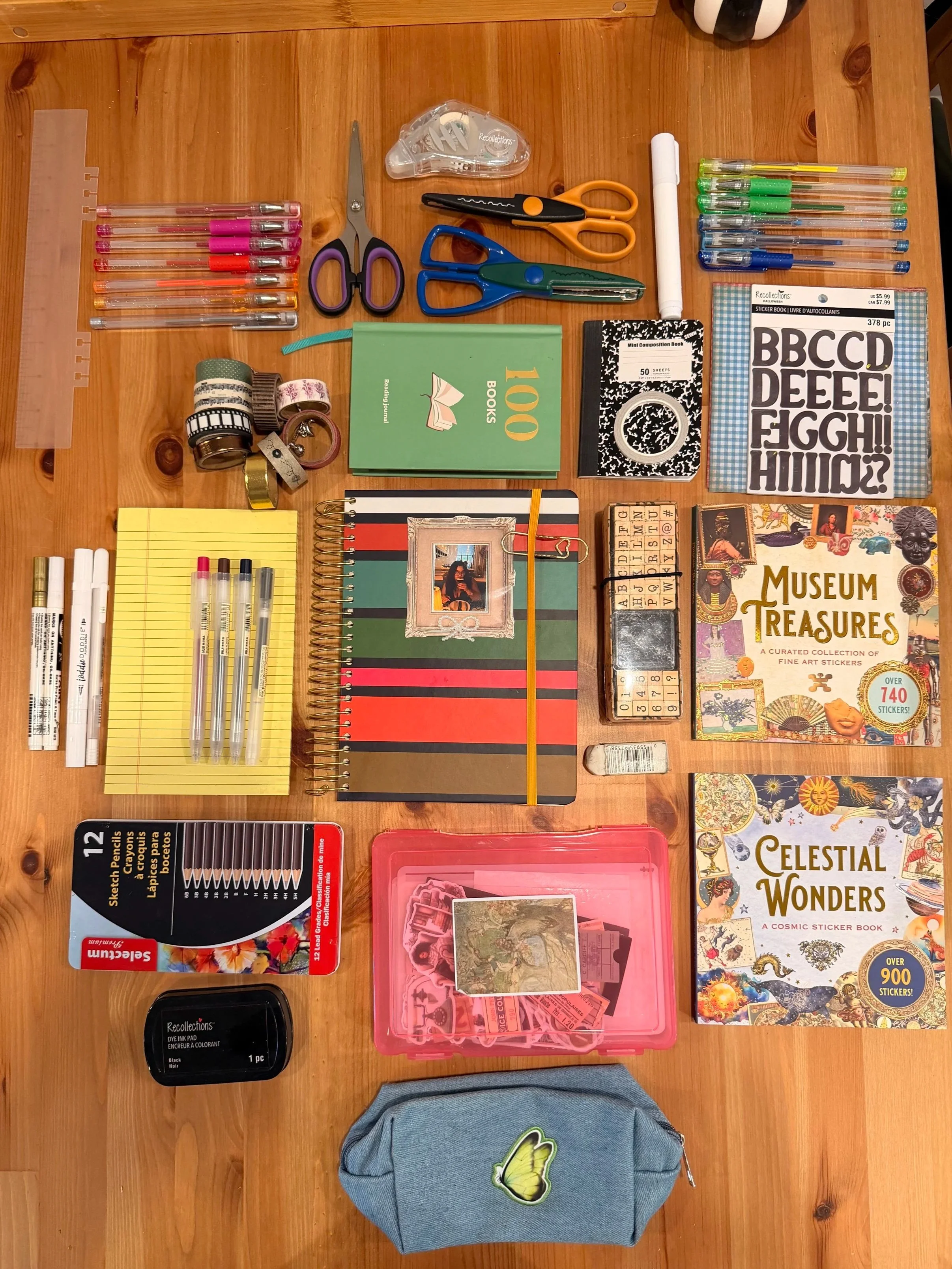
Inventory of field equipment | Expedition: Buenos Aires, São Paulo, Rio de Janeiro | Departure in [fill-in] days | Clothes: not yet considered
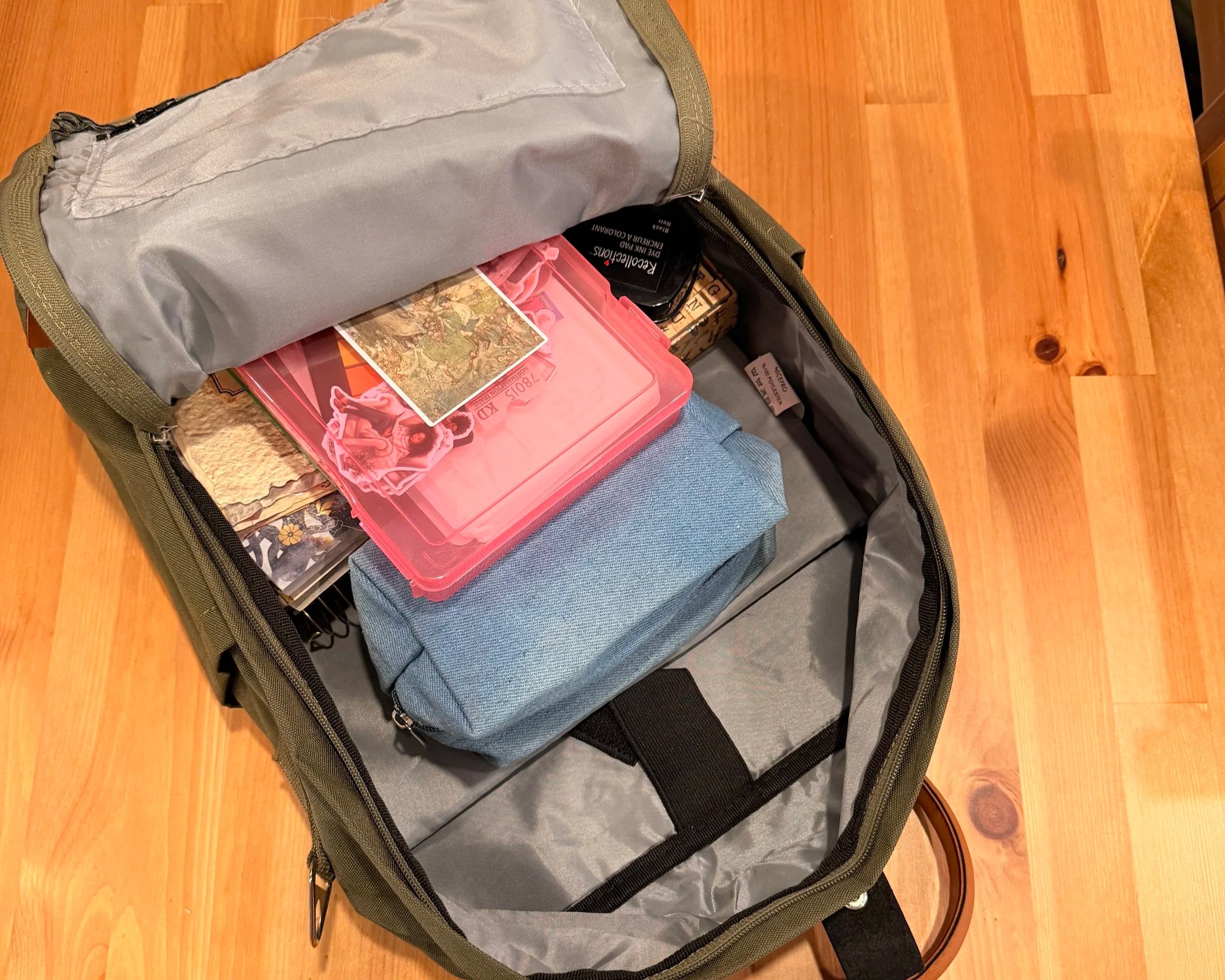
The travel writer Bruce Chatwin once observed that losing a passport was the least of one’s worries, but losing a notebook was a catastrophe. I think about that line every time I pack, which is why, nine days before a fourteen-day trip, my suitcase is empty and my journaling bag is completely full.
This is, I’m told, the wrong order of operations. I would argue it’s the only correct one. Clothes can be bought anywhere, and I probably wear the same comfy walkable outfit most of the trip. The things I’ll use to remember the trip can’t.
So here, in the spirit of full methodological transparency, is everything in my travel field kit, why each piece is there, and surprisingly long history of people packing small bags for the purpose of paying attention.
A Short History of Packing to Pay Attention
In 1874, a committee of British scientists published a small handbook with a very long title: Notes and Queries on Anthropology, for the Use of Travellers and Residents in Uncivilized Lands. Its purpose was to help non-specialists (travellers, missionaries, colonial officers) bring home “accurate” observations of the people they met. It went through six editions, the last in 1951.
It’s worth being honest about this book. The title alone tells you a great deal about the assumptions of its time, and its early editions drew on contributors who promoted racial theories now thoroughly discredited. Modern anthropology has spent a long time reckoning with that inheritance, and rightly so. But the underlying idea of the handbook, that observation is a skill you prepare for and that what you bring shapes what you notice, outlived its authors’ prejudice. In a sense it was the first packing list for the mind.
A generation earlier, a young Charles Darwin had worked out his own system for packing. During the voyage of the Beagle (1831-1836), he carried a series of small pocket notebooks, most of them bound in leather with brass clasps, and wrote in them almost entirely in pencil, often on horseback or on a mule, far from the ship. Back on board, he copied and expanded those quick notes in ink into his proper journals. He also only ever took one notebook ashore at a time, so that a single river crossing accident never cost him everything.
The two-step method, scrawl now and write it up later, became the backbone of anthropological fieldwork. Anthrpologists still distinguish between scratch notes, the hurried jottings made in the moment, and fieldnotes, the fuller account written up afterwards. The anthropologist Simon Ottenberg added a third category, which I love: headnotes, all the memories and impressions that never make it onto paper but shape everything you later understand. Every journaler knows headnotes. They’re the reason a single word on a card can bring a whole afternoon back.
When Bronislaw Malinowski did his famous fieldwork in the Trobriand Islands during the First World War, he urged anthropologists to record what he called “the imponderabillia of actual life”: the routines of a working day, the tone of a conversation, the small habits that never appear in official accounts. If I had to choose a motto for travel journaling, it would be that phrase.
And the little black notebook itself has a story. Chatwin bought his from a stationer on the rue de L’Ancienne Comédie in Paris. They were made by a small family firm, and when the firm closed in 1986, the shop’s owner told him, “Le vrai moleskine n’est plus”: the real moleskin is no more. Chatwin, panicking, bought up every one he could find. A decade later, a company revived the design and named it after his nickname for it, and the rest is a stationary aisle near you.
The Kit, Item by Item
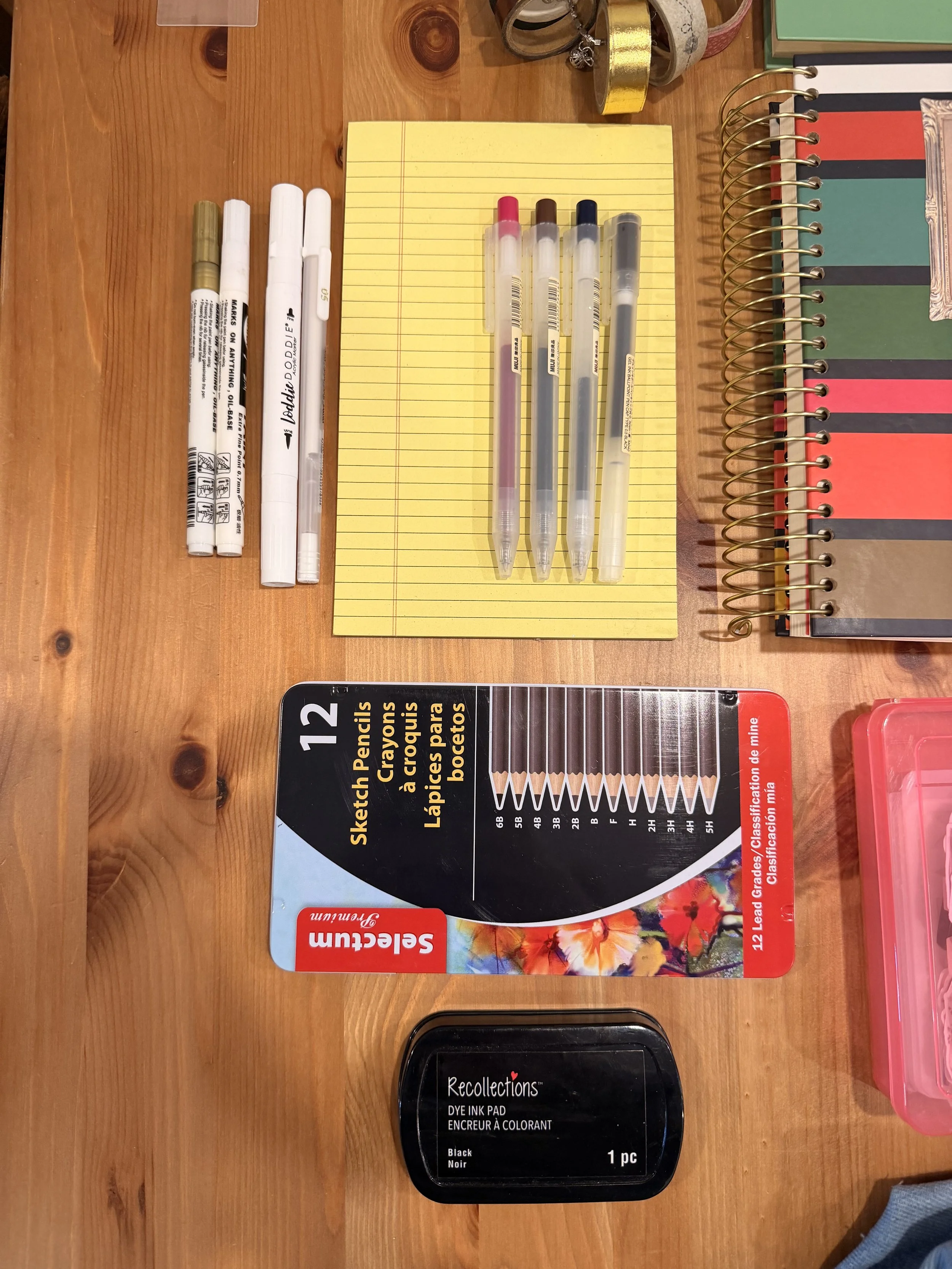
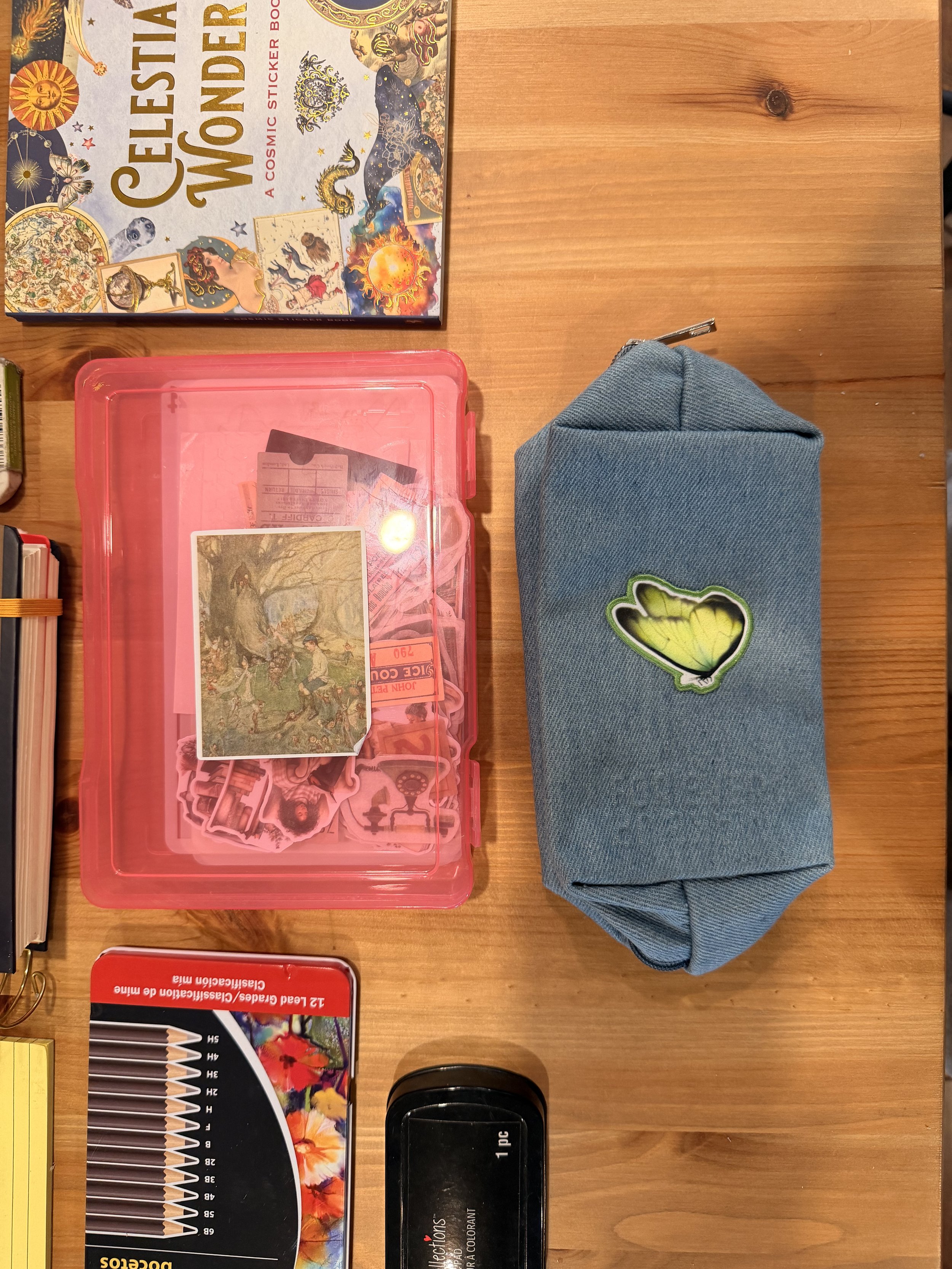
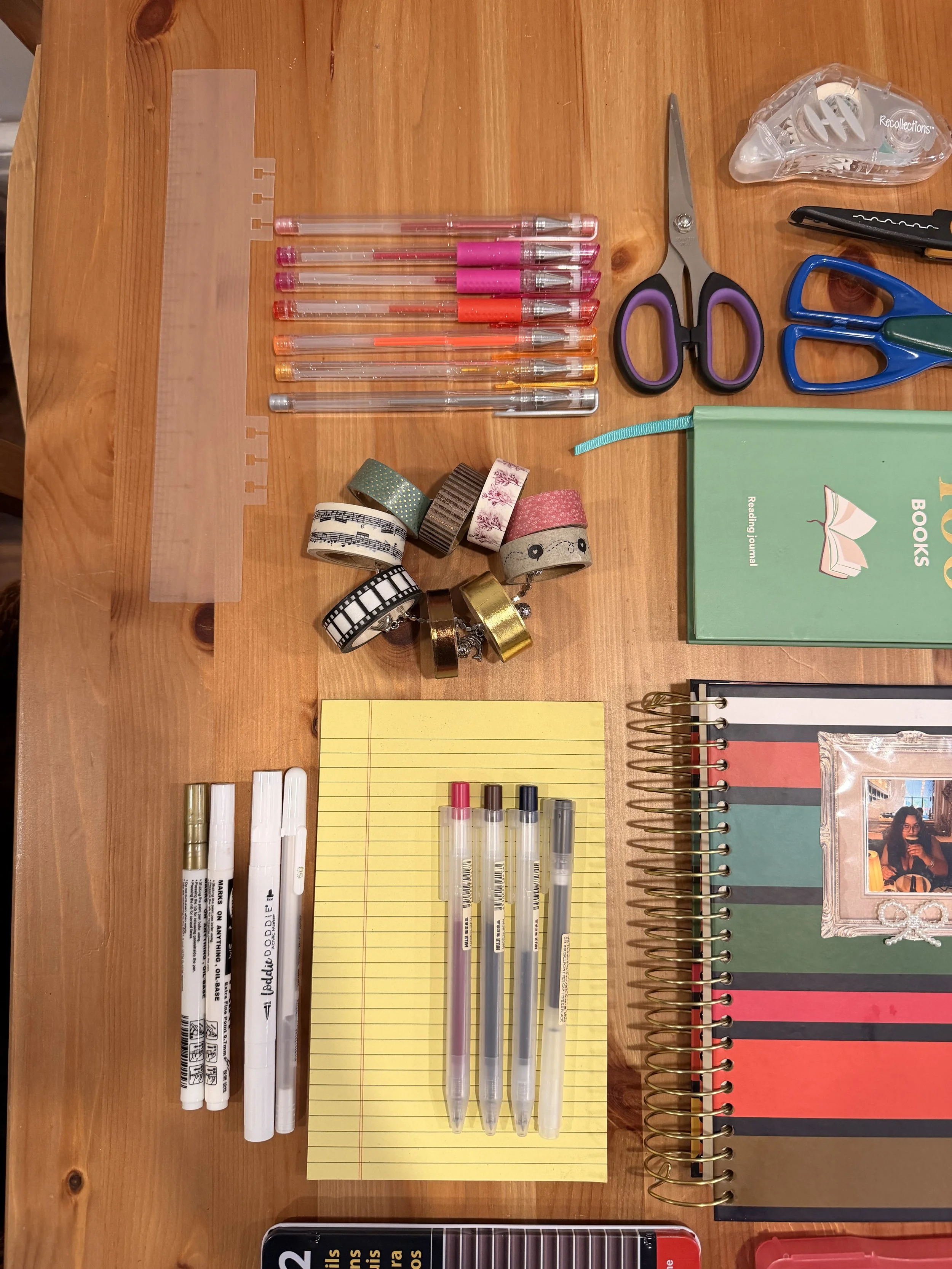
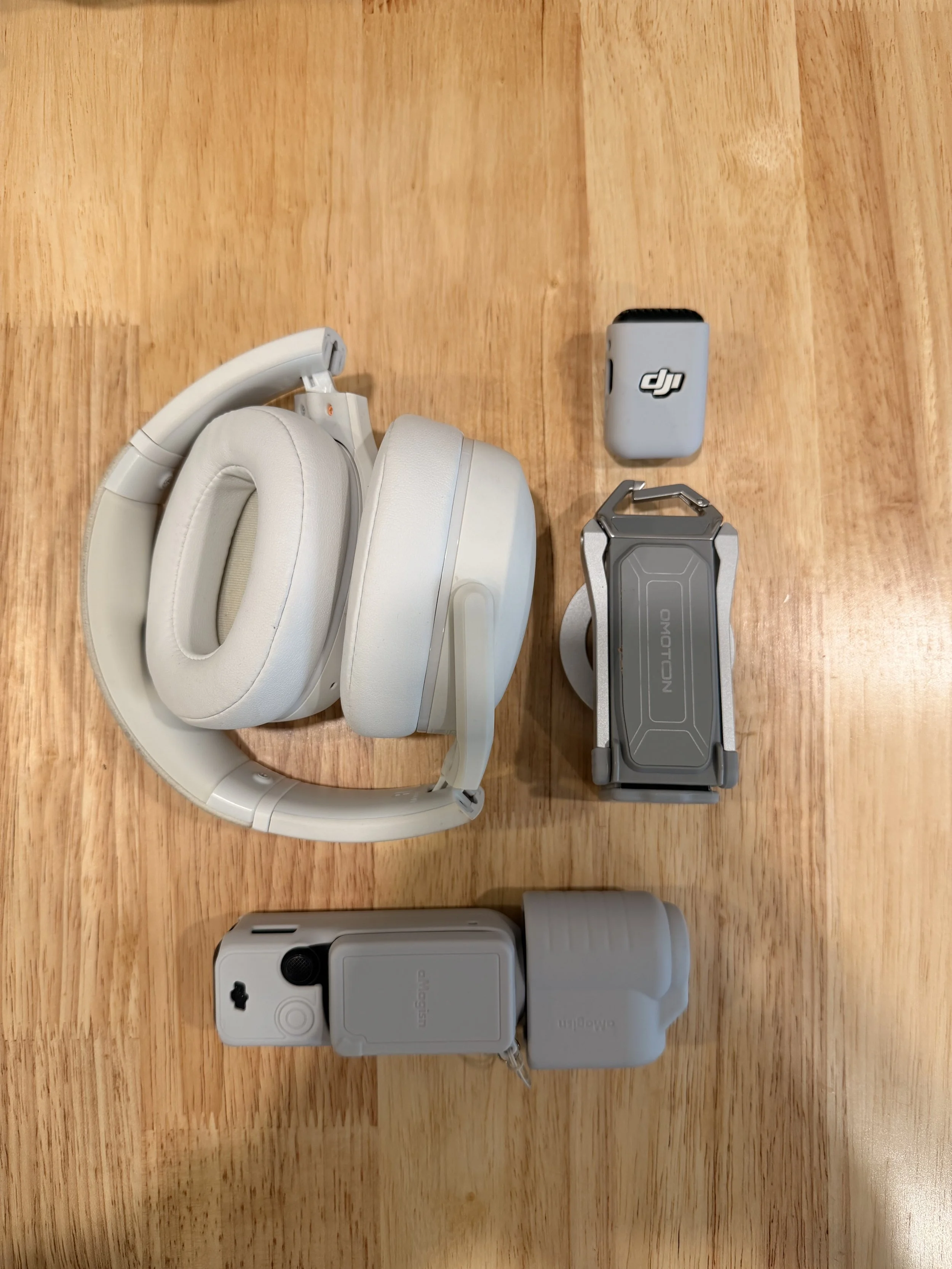
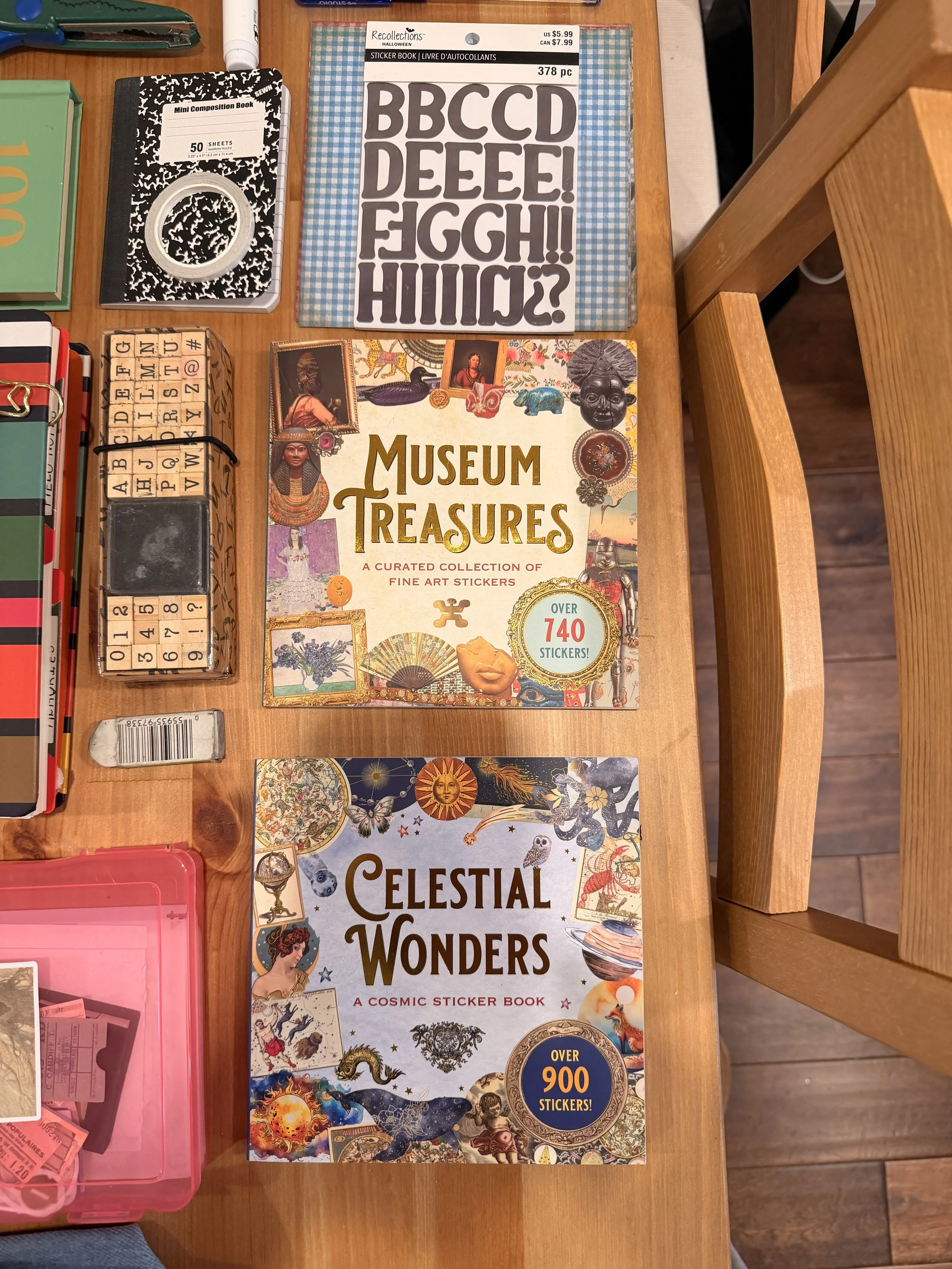
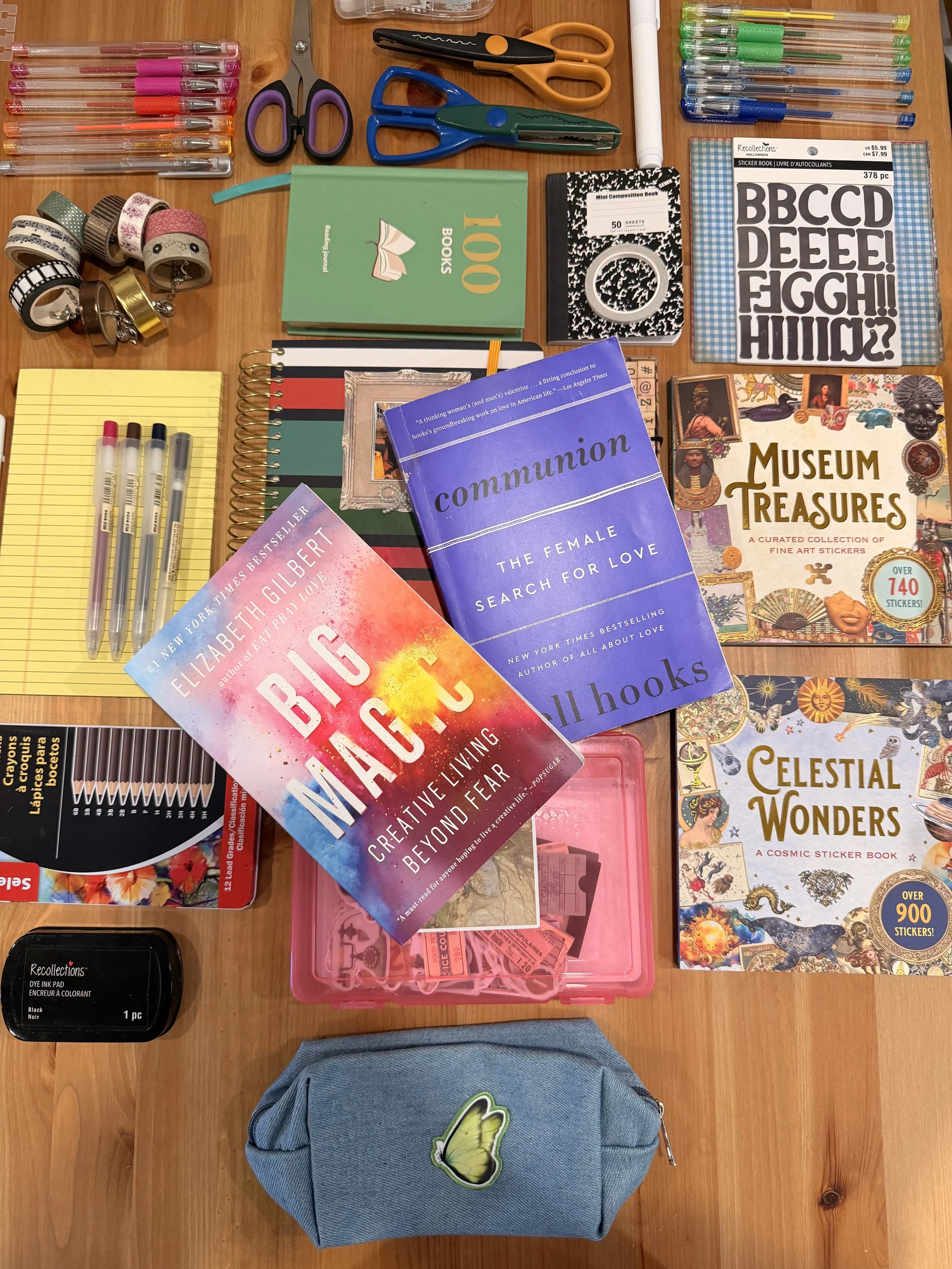
The Notebook
Field classification: primary instrument.
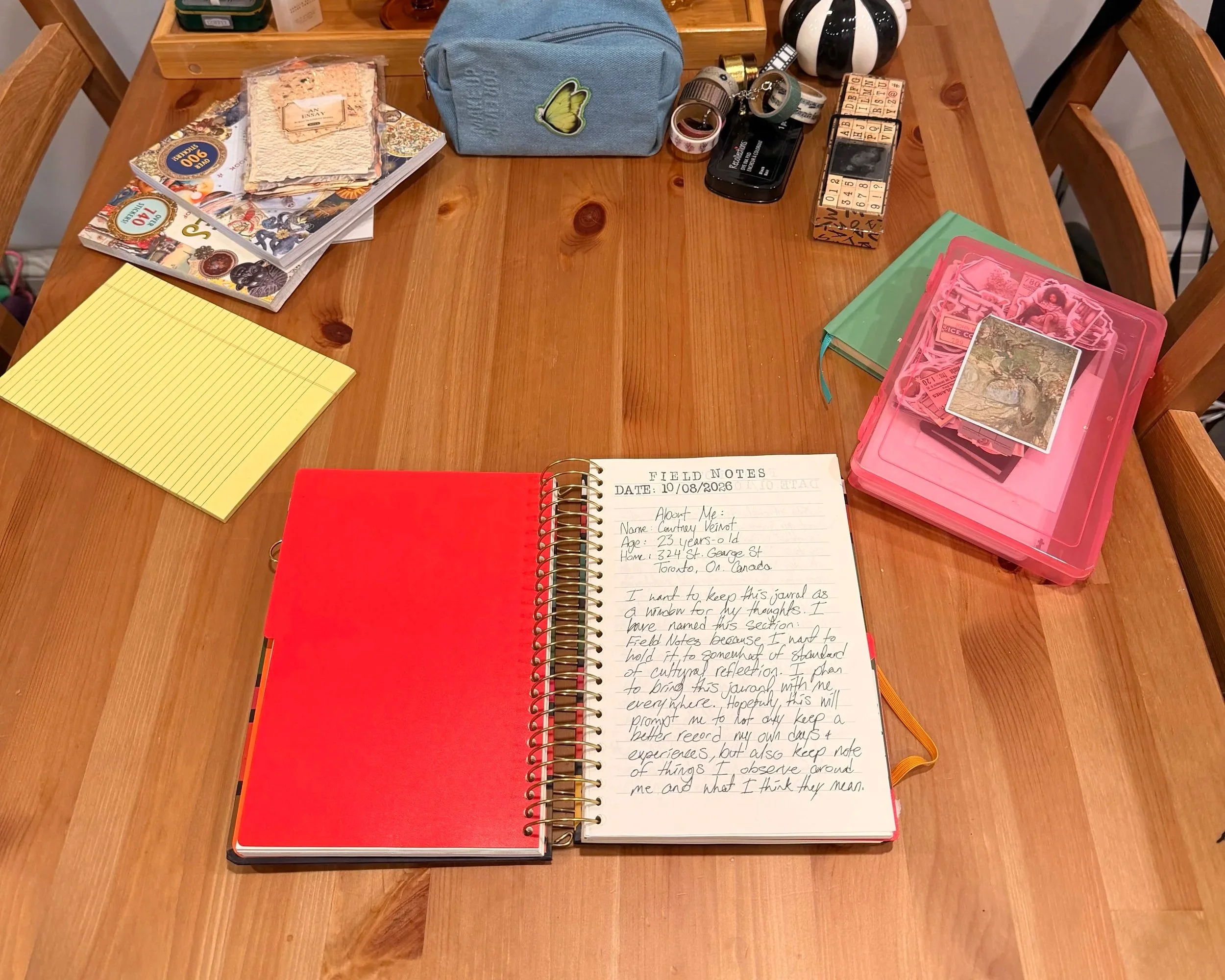
Everything else in the bag exists to serve this. My current journal is a try-fold spiral A4 journal with three primary sections: Free thoughts, Fieldnotes, and Memories. I’m extra proud of this journal because I found it as a one-of-one in a deadstock store and it perfectly matches my travel journal bag with the colourful stripe design. My requirements are few but non-negotiable: it must be small enough to write standing up, sturdy enough to survive the bottom of a bag, and plain enough that I’m not afraid to ruin it. A beautiful notebook you’re too nervous to write in is a decorative object, not a field instrument
Writing Tools
Field classification: secondary instruments, prone to loss.
I carry a meddly of pens with me, but the intentiona choices are the MUJI o.3 fine points pens in black, blue, pink, and brown. I’ve also just added an array of black fineliner pens for sketching, and I have a slection of gel pens in neon, metallic and sparkly colours so I can give more character to my notes and doodles. Always include a pencil too. Darwin knew what he was doing: pencil does’t run in the rain, doesn’t leak on planes, and keeps working when a pen has given up. Bring more pens than seems reasonable. They are field equipment most likely to be lent, dropped, or to simply vanish without explanation. Sometimes to be miraculously found in the bottom of bags you swear you never tossed them in.
Specimen Envelopes
Field Classification: collection apparatus.
A few small envelopes or glassine bags for everything that wants to come home with you: ticket stubs, receipts, sugar packets, a pressed flower, a museum map, the paper wrapper from a pastry you’re still thinking about. I use a sturdy plastic envelope witha snap button, it holds shape well so things don’t get crumpled or bent from coming in and out of my luggage. I sort them by city, or sometimes on busier trips by day, so my journal will follow the itinerary of the trip. Then they become the best raw material for the journal pages of the trip.
Tape and Glue
Field classification: preservation methods.
Roll-on tapes are my favourite, they fit in small packets and can be grabbed to to make anything a sticker in my journal. I also carry a glue marker for when I need a liquid glue option, but the marker format makes application easy and mess free. I keep a rotating selection of washi tape rolls in my bag. I usually tailor them to the current trip based on colours and designs. Washi tapes are for things you might want to move later, glue is for things that are staying forever. I have a tiny pair of all-purpose universal scissors, because I needed a compact left-handed solution. But remember that regular scissors need to be packed in checked luggage and not your carry-on.
The Rcording Kit
Field classification: supplementary documentation.
I’m not a purist. Alongside the notebook, I carry my phone camera, sometimes my canon digital camera, and a DJI Osmo Pocket 3 for videos and photos. my phone also doubles as my on-the-go point of access for the Letters To Somewhere App, where every entry I write pins itself to a map and stamps a digital passport. The notebook catches what I felt. The app catches where I was. Between them, very little gets lost.
One rule from the field: the camera serves the notebook, not the other way around. If I’ve spent an afternoon filming and haven’t written a word, the day hasn’t been recorded. It has just been stored.
One Book
Field classification: theoretical framework.
Only one, because paper is heavy and bookshops abroad are better. This trip it’s still undecided because I’m looking for one to fall in theme with the trip itself. Reading something written about a place while you’re actually there is one of the quiet pleasures of slow travel. The page and the street keep correcting each other. Sometimes you don’t find the book that fits the bill until you’re there. On my last trip to London, I didn’t really go with the specific book picked out. But on a solo day I took myself to the British Library to see the preserved texts exhibit. And of course, I had to check out the book store on my way out. It was there I found a short story anthology of old train mysteries all set in England. This became my favourite book of the trip, and I read it vigorously on my trains back and forth to Cambridge to visit a friend.
The Protocol
Field classification: research design.
Finally, I will be carrying a digital copy of the Fourteen-Day Field Protocol: fourteen prompts, one for each day, kept for reference with my notebook. On the days I’m tired, or overwhelmed, or simply don’t know where to start, the prompt starts for me. Day 7 asks me to describe a meal with the gravity of a museum placard. I’m looking forward to the empanadas for that.
What I Leave Behind
Equally important, in my experience, is what stays home:
The ambition to record everything. You can’t, and trying will cost you the trip. trust your headnotes to fill in the gaps. I’m struggling with this more recently, because I am not only recording for me but I’m also recording for the business and trying to produce quality and intentional content from each trip. In those moments I remember to stay grateful that I even get to have this worry.
The “good” notebook. See above. Bring the one you’re willing to spill coffee on. And be happy that you will have that coffee ring stain to remind you of that little café when the memories of the trip have started to fade.
Any supplies I haven’t used in the last month. The field is not the place to reignite an old hobby. Give your focus to the creative outlets that currently bring you joy, and leave room for finding new methods and supplies on your trip. For this trip I am bringing water colours for the first time, because I think they will capture to meleage of colours I expect to stare at from a café window.
A Note On Photographing Your Kit
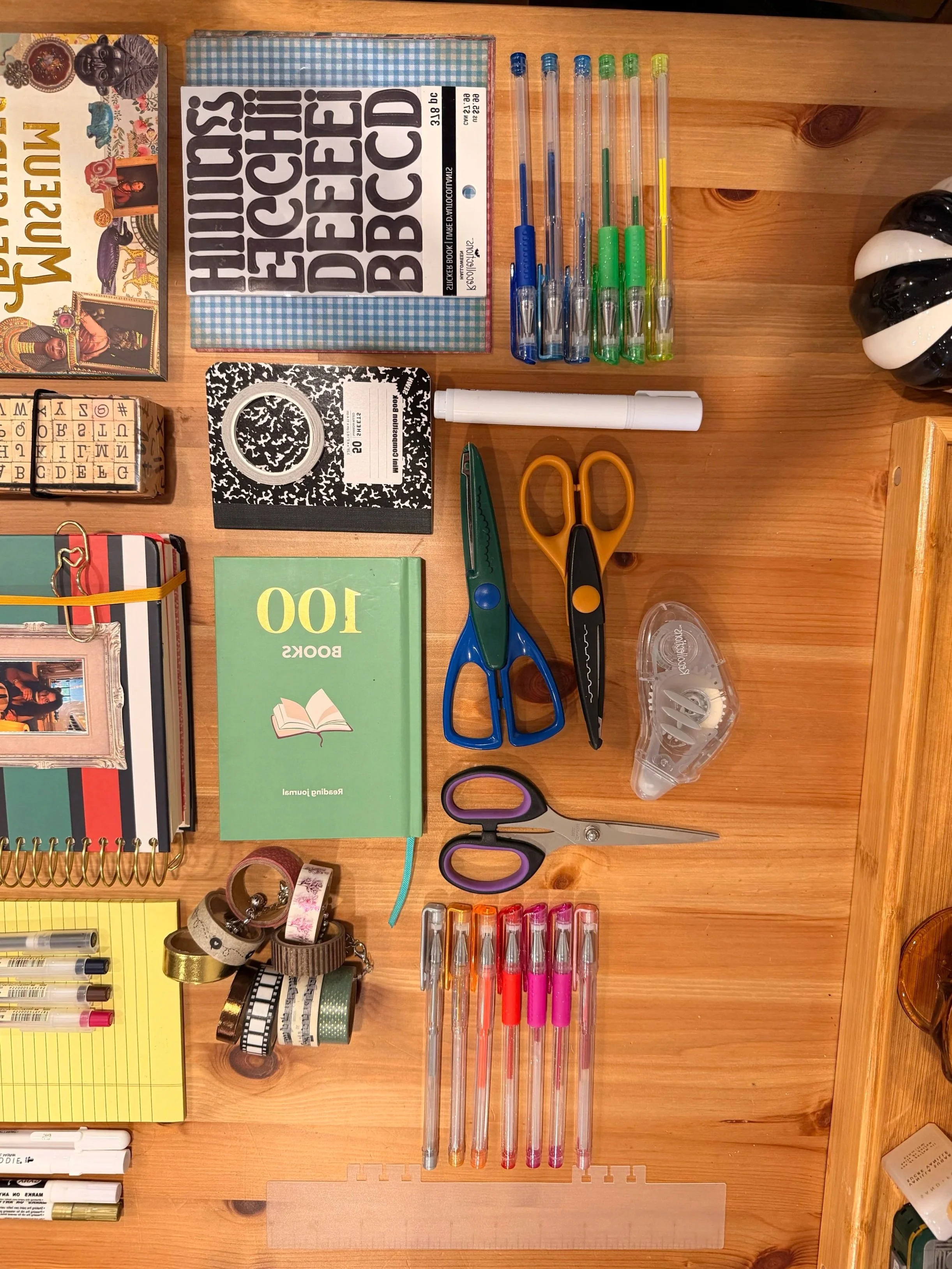
If you want to photograph your own kit (and I’d encourage it, because a picture of what you carried is part of the record,) there’s a name for that perfectly squared, overhead layout: knolling. The word was coined in 1987 by Andrew Kromelow, who worked as a janitor in Frank Gehry’s furniture workshop. While cleaning up after hours, he took to arranging stray tools in neat right-angled grids, and named the habit after the angular furniture Gehry was designing for the company Knoll at the time.
As a way of seeing, knolling is a lot like fieldwork. You lay everything out, give each object its own space, and suddenly notice what you actually have. Try it before your next trip: you’ll find three pens you forgot you owned and the one item you definitely need to relace.
Field Reading List
Bruce Chatwin, The Songlines (1987). Walking, storytelling, and the most famous notebook panic in travel writing.
Roger Sanjek (ed.), Fieldnotes: The Makings of Anthropology (1990). Anthropologists writing candidly about their notebooks, including Simon Ottenberg's essay on headnotes.
Bronisław Malinowski, Argonauts of the Western Pacific (1922). The source of "the imponderabilia of actual life."
Charles Darwin, The Voyage of the Beagle (1839). The written-up version of all those pencil notes.
Patrick Syme, Werner's Nomenclature of Colours (1821). Reprints exist, and it's a beautiful object in its own right.
Your Own Field Kit
You don’t need anything I’ve listed specifically to keep a good travel journal. You need a notebook, a pen, and a reason to stop and look. But if you’d like a little structure to bring along on your next adventure, The Fourteen-Day Field Protocol is free: fourtten daily prompts for noticing the small things, printable in US Letter, A4, or keeping in your iPad, for members of the Slow Travel Society. And if fourteen days isn’t enough, the 30-day prompted journal is in my shop.
Join the Slow Travel Society and get the Field Protocol ➡️
Next time I write I’ll be writing from the field.
Warmly, Courtney
