São Paulo for Wanderers: Museums, Murals and Liberdade
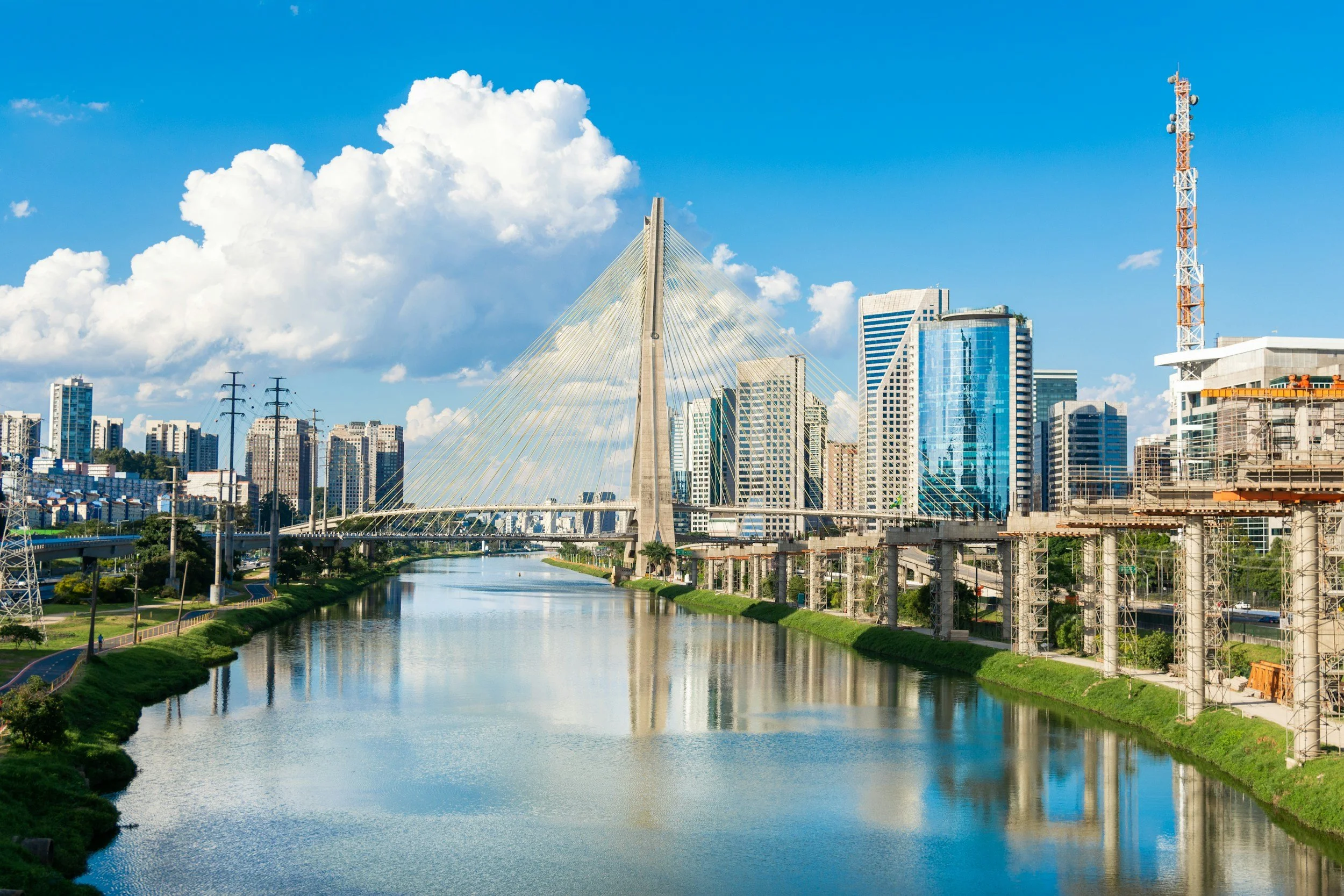
Field site: São Paulo, Brazil ~ Status: not yet visited ~ Notes filed in advance, to be corrected by reality
In 1935, a young French philosopher arrived in São Paulo to teach sociology at the city’s brand-new university. His name was Claude Lévi-Strauss, and he would go on to become one of the most influential anthropologists of the twentieth century. But first, he had to make sense of São Paulo, and São Paulo did not make it easy.
Years later, in Tristes Tropiques (1955), he wrote about the city with a kind of baffled affection. What struck him was that cities in the New World seemed to skip a stage. (“New World” is the old European name for the Americas, the lands Europeans reached from 1492 onward, set against the “Old World” of Europe, Africa, and Asia. Lévi-Strauss used it the way Europeans of his day did, and that’s worth remembering that the Americas were hardly new to the people already living there.) European cities age slowly, over centuries, into something venerable. São Paulo, as he saw it, went straight from new to worn without ever passing through old. It was built and demolished at the same time.
Ninety years on, every guide to São Paulo still begins by telling you how big it is. I will spare you the numbers. The relevant finding is this: it is a city too large to see, which makes it an excellent city for not trying.
In November, Jackson and I will spend four days there, two of them his and two of them ours together. His are for a tournament, the Pokémon South American International Championships. Ours are for wandering. This is the plan for the one full day we have together, written before I’ve set foot on a single block of pavement, in the spirit of good fieldwork: confidently, thoroughly footnoted, and with generous room for error.
Method: Walking as Fieldwork
The French scholar Michel de Certeau has an essay I return to whenever I’m about to land somewhere large. In The Practice of Everyday Life (1980), he imagines looking down on Manhattan from the top of the World Trade Centre. From up there, the city is legible, a map, a totality. But nobody lives in the view from the top. The city is actually made, he argues, by the people walking around at street level, taking shortcuts and detours, writing a kind of text with their feet that none of them can read from above.
The anthropologist Tim Ingold makes a related distinction on Lines (2007), between transport and wayfaring. Transport is getting from A to B, where the line between them doesn’t matter. Wayfaring is travel where the line is the point, where you notice as you go and the route becomes a part of what you know.
So here is the method, such as it is:
One neighbourhood per half day.
No more than one museum.
A meal that is the point of the evening, not a refuel between sights.
Notebook open. Phone mostly in my bag.
The slow traveller’s mistake in a city this size is treating it like a checklist. The goal here is not to do São Paulo. It’s to sit in three or four corners of it long enough that they start to feel like somewhere, and to write it down in enough detail that it means something later. Clifford Geertz called this thick description: not just recording that something happened, but what it meant to the people it happened to. It’s the idea this whole site is built on, and São Paulo seems like a city that rewards it.
I also have a patron saint for this trip. In 1927, the São Paulo writer Mário de Andrade set off on a journey up the Amazon and kept a diary he titled, with what I can only assume was a straight face, O Turista Aprendiz: “The Apprentice Tourist.” One of the founders of Brazilian modernism, travelling as a self-declared beginner, writing everything down. I can think of no better job title.
A Brief Unauthorized History of the Field Site
São Paulo began in 1554 as a Jesuit mission on a plateau above the coast, a small college built to convert the Indigenous peoples of the region. For its first few centuries, it was a frontier, the departure point for the Bandeirantes, expeditions that pushed into the interior in search of gold, land and enslaved labour. It’s a founding history the city is still reckoning with.
Then came coffee. In the nineteenth century, the plantations of the São Paulo countryside made the region enormously rich, and the city grew on that money. Coffee also needed workers, and after Brazil abolished slavery in 1888, the last country of the Americas to do so, the state recruited immigrants by the hundreds of thousands: Italians, Portuguese, Spaniards, and from 1908, Japanese. Each wave left a neighbourhood behind, which is part of why walking across São Paulo can feel like walking across several countries.
And in February 1922, at the Theatro Municipal, a group of artists and writers staged the Semana de Arte Moderna, Modern Art Week, a deliberately provocative festival meant to break Brazilian art away from European imitation. Mário de Andrade read from his new poetry collection, Paulicéia Desvairada, usually translated as “Hallucinated City.” It was about São Paulo. Even then, the city was too much to describe calmly.
Morning: One Museum, Chosen Carefully
The great São Paulo museum debate, as far as I can tell, comes down to two buildings. I have not yet decided. Here is the case for each.
The Case for MASP
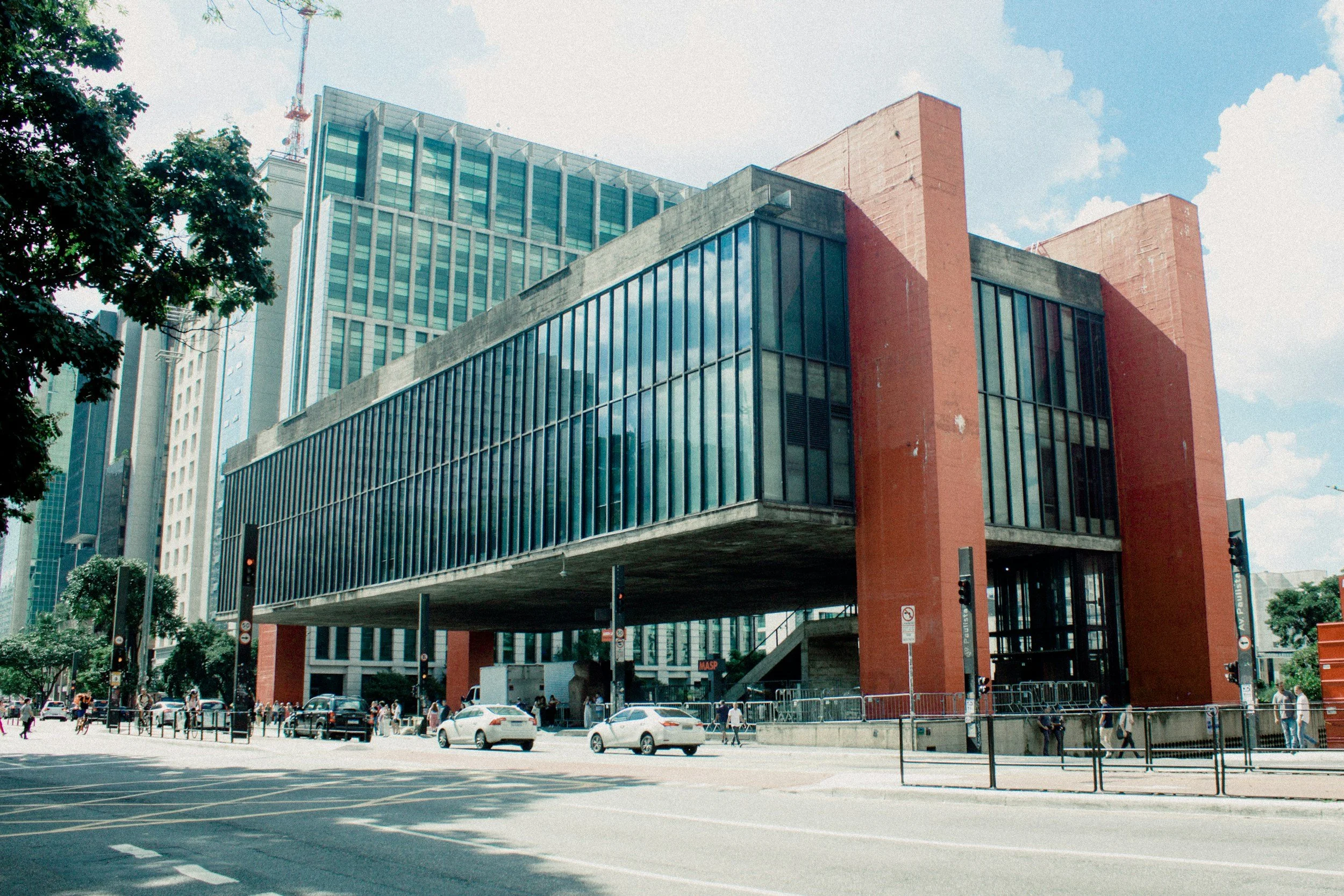
MASP, the São Paulo Museum of Art, sits on Avenida Paulista, the city’s long spine of a street. Its building, which opened in 1968, was designed by the Italian-born Brazilian architect Lina Bo Bardi, and it appears to be hovering. A long red-and-concrete box is lifted off the ground on four great pillars, leaving an open plaza beneath it, the vão livre, or “free span.” Bo Bardi intended that space for the public, and it has been used ever since for protests, concerts, antique fairs, and people simply sitting in the shade, all of it happening underneath an art museum.
Inside, she made a more radical choice. Instead of hanging paintings on walls, she mounted them on glass easels: panes of glass set in concrete blocks, standing freely across one open floor. You walk among the paintings rather than past them, the way you’d move through a crowd. The labels are on the back, so you meet the work before you’re told what to think of it.
Not everyone loved this. In 1996, the easels were removed, and the paintings went back on walls, as paintings are supposed to be. For nearly twenty years, that was that. Then, in December 2015, MASP rebuilt more than a hundred of the easels and put the collection back on them. I find something very reassuring about a museum that changed its mind and admitted it.
Practicalities: MASP is open Tuesday to Sunday and closed Mondays. Full admission is currently R$85, and entry is free on Tuesdays with an online reservation and on Friday evenings from 6 pm to close. Of course, always double-check the museum’s site before you go, as these can change.
The Case for the Pinacoteca
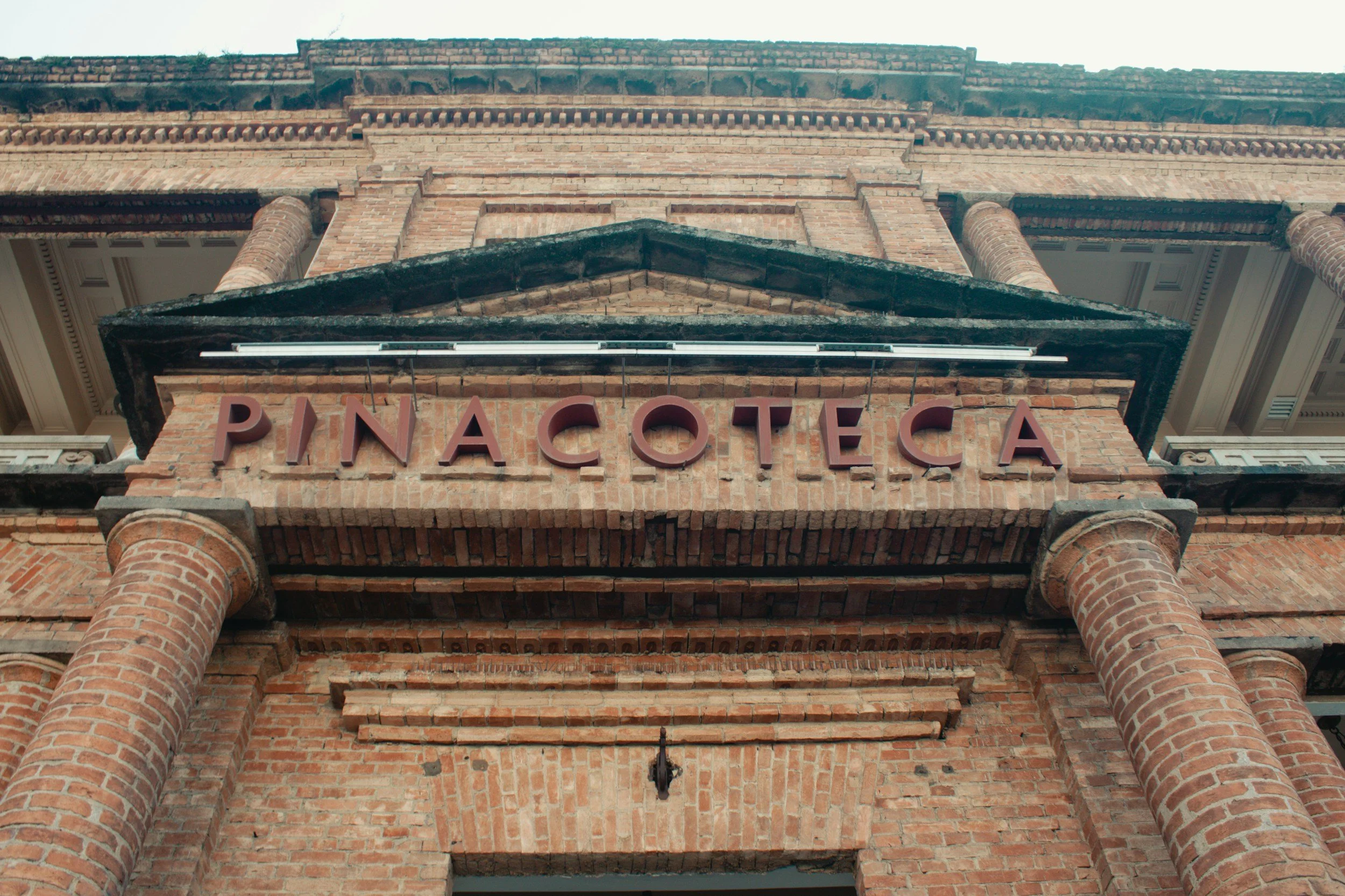
The Pinacoteca is older, quieter, and closer to the historic centre, beside the Jardim de Luz. Founded in 1905, it’s the city’s oldest art museum, and its collection centres on Brazilian art: Almeida Júnior's quiet rural scenes, Lasar Segall, and Tarsila do Amaral, the painter at the heart of Brazilian modernism.
Tarsila is where the story gets good. In 1928 she painted a strange enormous-footed figure with a tiny head and gave it to her husband, the poet Oswald de Andrade, as a birthday present. He was so struck by it that he wrote a manifesto in response: the Manifesto Anthropófago, the “Cannibal Manifesto.” Its argument, roughly, was that Brazilian culture shouldn’t copy Europe or reject it, but devour it, digesting foreign influences and turning them into something new. The painting was named Abaporu, from a Tupi phrase for “the man who eats people.”
The anthropological irony is not lost on me. A metaphor taken from European accounts of Indigenous practices, turned around by Brazilian artists into a theory of their own culture. It’s a whole seminar in one painting.
The second irony: Abaporu isn’t in São Paulo. It’s in Buenos Aires, at MALBA, which we will visit a few days earlier on this same trip. So I’ll meet the painting before I meet the city that produced it, which feels backwards in a way I suspect Oswald would have enjoyed.
The Pinacoteca now spans three buildings near Luz station, and one ticket covers all of them on the same day. One of them, the Pina Estação, once housed the political police during Brazil’s military dictatorship, a reminder that buildings, like neighbourhoods, carry more than one history.
Practicalities: The Pinacoteca opens Wednesday to Monday and closes on Tuesdays. Tickets are around R$40, and entry is free on Saturdays.
The Verdict, Pending
Our free day falls on a Thursday, so both will be open. My current hypothesis: the Pinacoteca, because I’d rather understand a place than be dazzled by it, followed by a slow loop through the Jardim da Luz. I reserve the right to change my mind on the day and blame the weather.
Afternoon: Beco do Batman
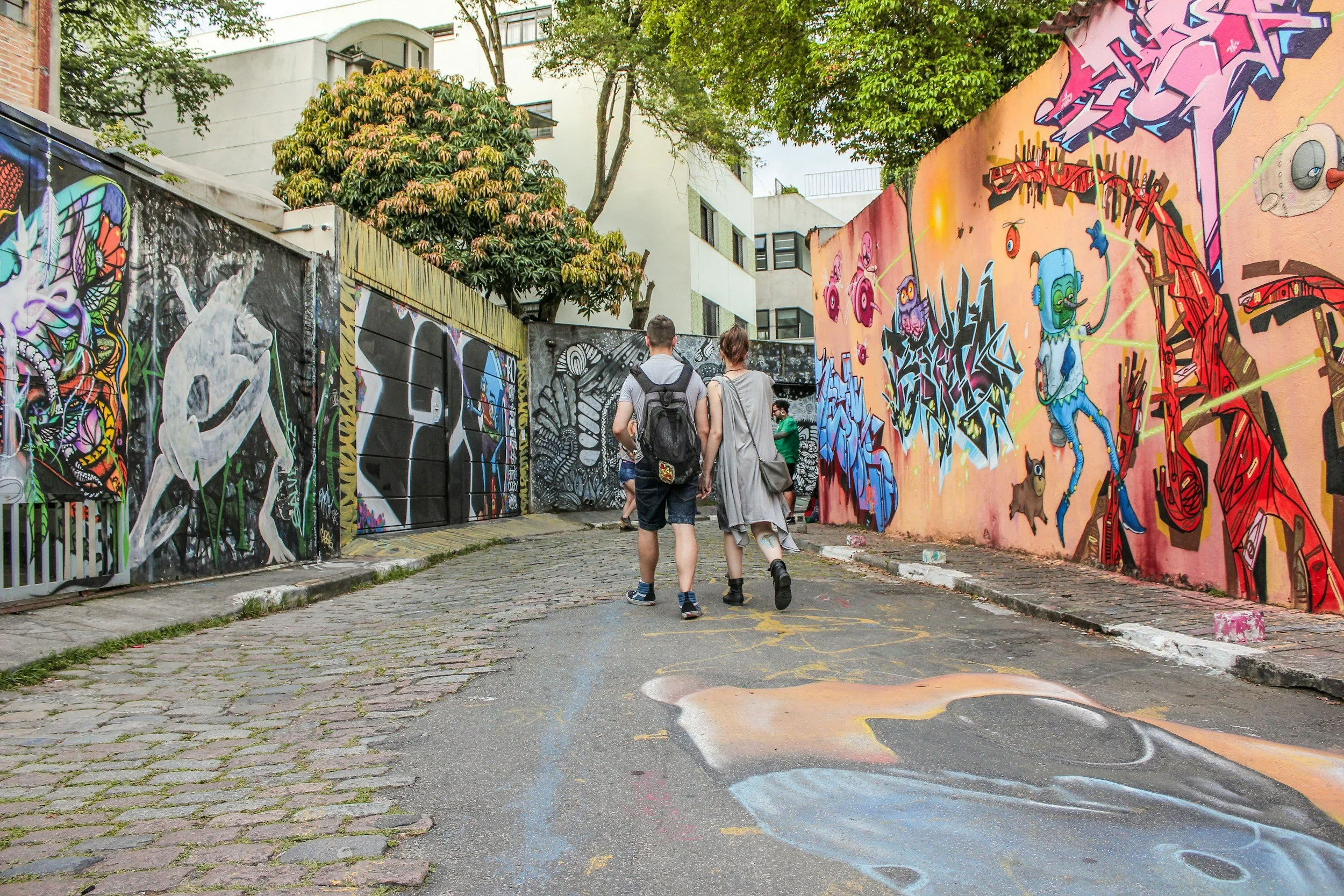
In Vila Madalena, three small alleys meet, and every surface is painted. It’s called Beco do Batman, Batman’s Alley, after the first drawing that appeared there in the 1980s. Art students followed, then street artists from across Brazil and abroad, and it has never stopped changing since. Older pieces are painted over with new ones, with the earlier artist’s permission, so the alley you visit is never quite the alley anyone else saw.
São Paulo has an unusually complicated relationship with its walls. In 2006, the city passed the Lei Cidade Limpa, the Clean City Law, which banned outdoor billboards almost entirely. Thousands of advertisements came down. What was left behind, in a city of millions, was a great deal of blank surface, and some of the most talked-about street art in the world grew up in these gaps.
There’s also a distinction any visitor should know. Graffiti, in the São Paulo sense, is the colourful, often commissioned art you’ll see in the Beco. Pixação is something else: tall, angular, black lettering climbing the sides of buildings, often in places that look impossible to reach. It’s unsanctioned, often illegal, and frequently read as protest against who the city belongs to. One is photographed by tourists. The other is mostly painted over by the city. Both are people writing on the city that surrounds them.
The anthropologist Teresa Caldeira spent years studying São Paulo, and her book City of Walls (2000) is about the other kind of walls: the gates, fences and security barriers that wealthier residents built around themselves as the city grew more unequal. She called the results fortified enclaves, and argued they quietly reshaped public life by deciding who gets to be on which side. Walking the Beco, I want to keep both kinds of wall in mind. Walls that keep people out. Walls that talk.
This also makes the alley a strange and lovely place to keep field notes. Whatever I record will be, in a few months, a historical document.
Two things I’m keeping in mind. It’s a residential street, and people live behind those murals, so I plan to be quiet, brief, and not the person blocking doorways for a photo. Some residents have reportedly painted their walls plain grey in protest at the crowds, which is its own kind of message. And the paving is said to be uneven and slippery after rain, which in late spring is a real possibility. Sensible shoes. Lower expectations of my own grace.
Evening: Liberdade
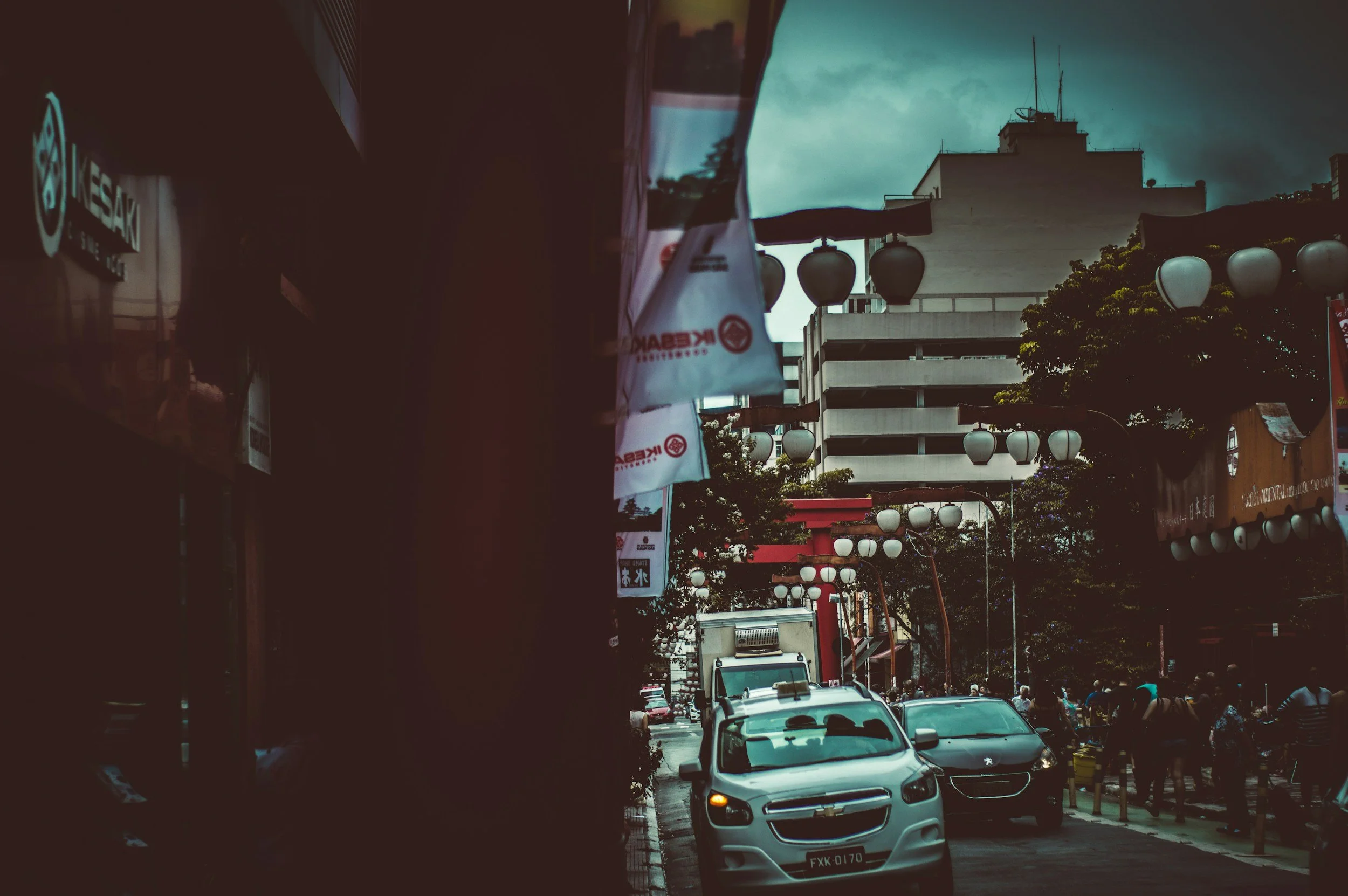
We’ll end the day in Liberdade, best known as the heart of São Paulo’s Japanese-Brazilian community, with its red lanterns and shopfronts in Japanese. But it’s a neighbourhood with layers, and I want to walk all of them.
Before the Lanterns
The square at its centre was once called Largo da Forca, Gallows Square. In the colonial period, it held a gallows and a pillory, used mainly against enslaved people who had tried to escape. Nearby was a cemetery for the executed and the poor, and the small Capela dos Aflitos, the Chapel of the Afflicted, built in 1779, which still stands.
In 1821, a Black soldier named Francisco José das Chagas, known as Chaguinhas, was sentenced to hang there for leading a protest over unpaid wages. According to the account that has come down to the present, the rope broke. Then it broke again. A crowd of thousands, convinced they were watching a sign, began to cry out for his freedom: liberdade. He was executed anyway. But the story holds that the cry stayed with the place, and when public hangings ended later in the century, the square took the name Liberdade. The details have been retold so many times that they’re hard to separate from legend, but people still leave notes and candles for Chaguinhas at the chapel door.
The Lanterns
On June 18th, 1908, a ship called the Kasato Maru docked at Santos, the port below São Paulo, carrying the first organized group of Japanese immigrants to Brazil, around 780 people. Most were bound for the coffee plantations, where the work was hard and the contracts harsh. Over the following decades, many moved into the city, and Liberdade became their neighbourhood. Today, São Paulo is home to the largest population of Japanese descent anywhere outside Japan.
In 2023, the central square was officially renamed Praça da Liberdade África-Japão, to honour both of the communities that made it. A statue of Deolinda Madre, who founded the neighbourhood’s samba school, now stands there.
What This Does to a Walk
Archaeologists use the word palimpsest for a surface that’s been written on, scraped back and written over, with traces of the older layers still visible underneath. Liberdade is a palimpsest you can walk through. I find that I want to move through it differently now: not straight towards dinner, but past the chapel first, and across the square slowly, with both of its names in mind, to remember both histories.
Then dinner. I have no restaurant chosen, on purpose. The plan is to walk until something smells right, and to practise my beginner Portuguese on whoever is patient enough to let me.
A Note of November 20th
The day after our wander is November 20th, Dia da Consciência Negra, Black Consciousness Day. It marks the death in 1695 of Zumbi dos Palmares, leader of Palmares, the largest and longest-lasting community of people who escaped slavery in colonial Brazil. Long observed in many cities, it became a national holiday by law at the end of 2023 and was first marked across the whole country in 2024.
I’ll write about it properly before we leave. For now it feels right that our one free day ends in a neighbourhood whose very name, if the story is true, came from a crowd calling for one man’s freedom.
Field Reading List
For anyone who wants to go deeper, or who simply enjoys packing more books than clothes:
Claude Lévi-Strauss, Tristes Tropiques (1955). Part memoir, part anthropology, part beautifully grumpy travel writing. His São Paulo years are in here. His photographs of the city in the 1930s were later published as Saudades de São Paulo.
Michel de Certeau, The Practice of Everyday Life (1980). The essay "Walking in the City" is the one to read before any trip.
Tim Ingold, Lines: A Brief History (2007). On wayfaring, and why the route matters as much as the destination.
Teresa Caldeira, City of Walls (2000). The essential anthropology of São Paulo's divisions.
Mário de Andrade, O Turista Aprendiz. The apprentice tourist's travel diaries. Required reading for apprentice tourists.
Oswald de Andrade, Manifesto Antropófago (1928). Short, strange, and the key to a century of Brazilian art.
Findings, Pending
This guide is a hypothesis. In late November I’ll come back and fill it in with what actually happened: which museum won, what the alley looked like that week, what the chapel door looked like, and where we ended up eating. If you’ve been to São Paulo, I’d love to know what I’ve gotten wrong.
And if you’re planning a trip of your own, I’ve made something for the notebook you bring. The Fourteen-Day Field Protocol is a free set of daily prompts for noticing the small things wherever you’re going, from unidentified sounds to meals that deserve a museum placard. Mário de Andrade would have approved, I think. It’s free for members of the Slow Travel Society, the monthly letter I send from wherever I am.
